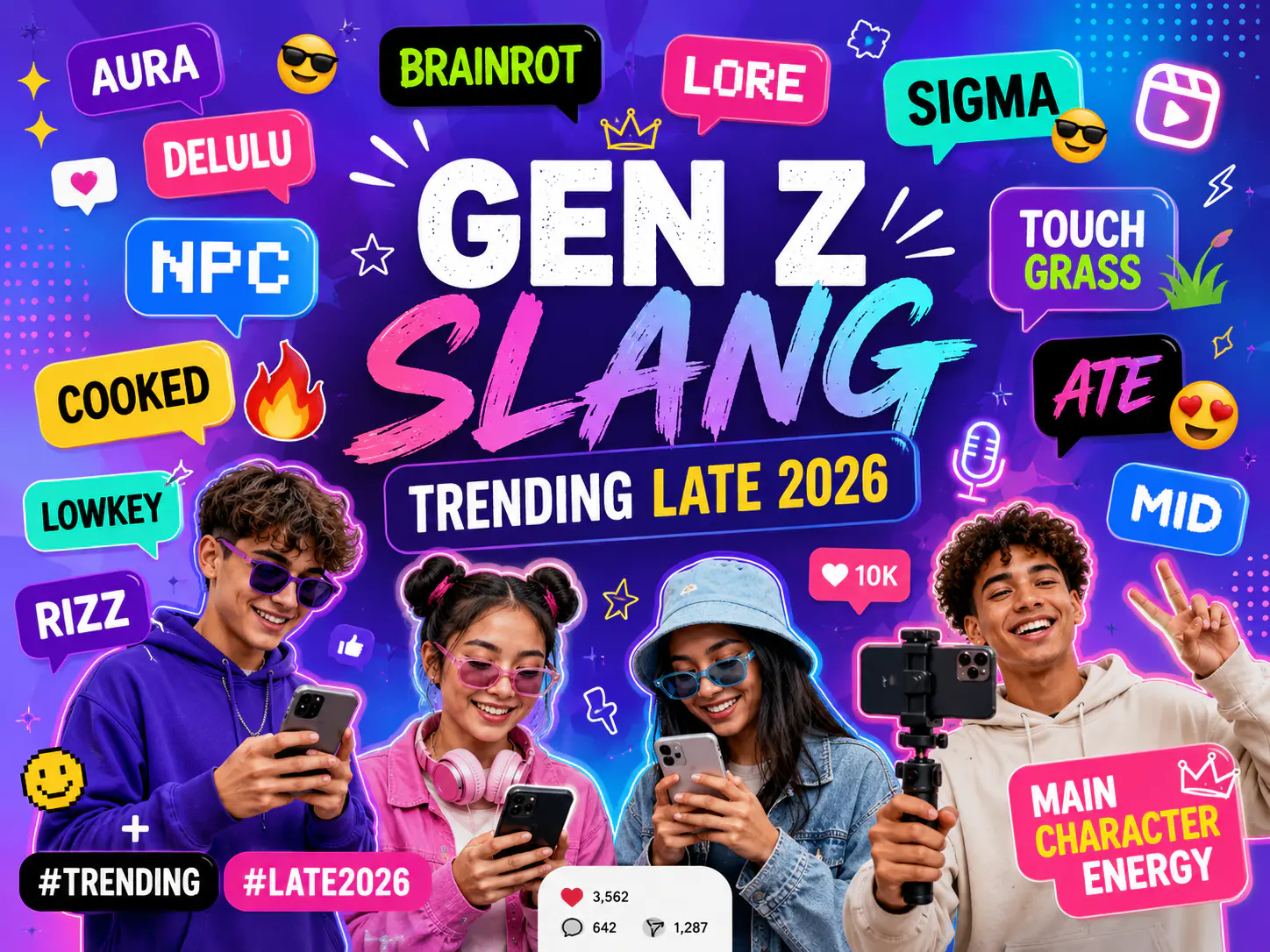
If you have scrolled through a comment section lately and felt completely lost, you are not alone. Gen Z slang keeps shifting every few months, and by late 2026 a fresh batch of words has taken over group chats, TikTok captions, and school hallways. Here is a simple breakdown of what people actually mean when they use these terms.
Crash out
To “crash out” means to lose your composure in a big, public, often dramatic way. It usually describes an emotional outburst over something small, like missing a bus or losing a video game. Someone might say, “I almost crashed out when my order got cancelled.” It is not always negative; sometimes it is used playfully to describe overreacting on purpose.
Bed rot
Bed rotting means staying in bed for hours doing nothing productive, usually scrolling on a phone. It is used half as a joke and half as an honest description of burnout. A typical sentence sounds like, “I had a free day so I just bed rotted until 4pm.” Parents and teachers searching this term are usually trying to figure out if their kid is okay or just resting.
Choppelganger
This one blends “chopped,” meaning unattractive, with “doppelganger.” A choppelganger is basically an unflattering lookalike of someone, often used as a joke when comparing two photos. It is blunt and a bit harsh by older internet standards, but Gen Z treats it as casual humor rather than a real insult.
Aura farming
Aura farming describes doing something deliberately to look cool, mysterious, or impressive online, even if the action itself is small. Think of a slow-motion walk, a confident pause before speaking, or a stylish outfit choice timed for a video. The phrase spread from sports clips before moving into everyday content.
404 coded
Borrowed from the website error code, “404 coded” describes someone or something that feels missing, broken, or simply not all there. It can be used lightly, like teasing a friend for forgetting plans, or more seriously to describe feeling disconnected or checked out mentally.
Mewing
Originally a jaw posture technique involving pressing the tongue to the roof of the mouth, “mewing” has turned into internet shorthand for staying quiet instead of answering a question. If someone avoids replying directly, a comment might read, “he’s just mewing right now,” meaning he is dodging the topic.
Delulu
Short for delusional, “delulu” describes someone living in a fantasy version of reality, often used affectionately. It might describe a person convinced a celebrity will notice them, or someone overly confident about an unlikely outcome. The phrase “delulu is the solulu” (delusion is the solution) has also stuck around as a half-joking life motto.
Skibidi
Skibidi started as nonsense from a viral video series and has since turned into a flexible word that can mean cool, ridiculous, or worthless, depending entirely on tone and context. Its meaning shifts so much that even regular users sometimes disagree on what it means in a given sentence, which is part of the joke.
Ohio
“Ohio” no longer refers to the state in this context. It has become shorthand for anything strange, chaotic, or absurd, usually attached to a weird video or situation. A clip of something bizarre might simply be captioned, “this is so Ohio.”
Why this matters beyond the joke
These words are not just internet noise. They show how fast online culture moves and how quickly a private joke between a small group can turn into something millions of people repeat without knowing where it started. Brands, schools, and parents are increasingly trying to keep up, not to sound trendy, but to understand what is actually being said around them.
Slang lists like this one change fast, often within a single school term. If a word here already feels old by the time you read this, that itself says something about how quickly Gen Z language moves in late 2026/27.